The resources are in! It looks like a sustainable (or not) development plan. While the opinion shapes up, have a look at this - it is a useful starter for you.
www.wikifieldtrip.org/Pennbury
Tuesday, 20 November 2012

Sunday, 7 October 2012


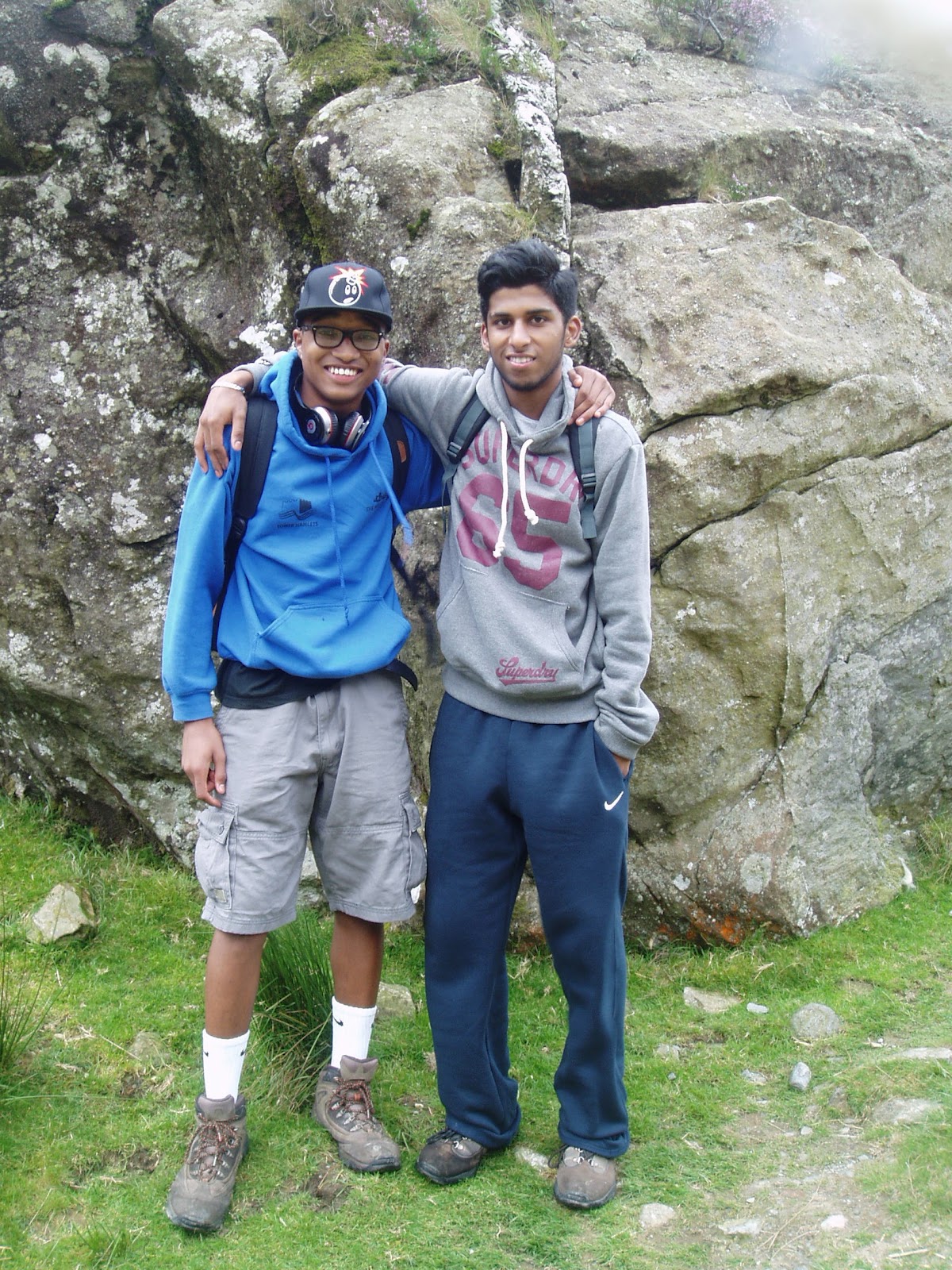
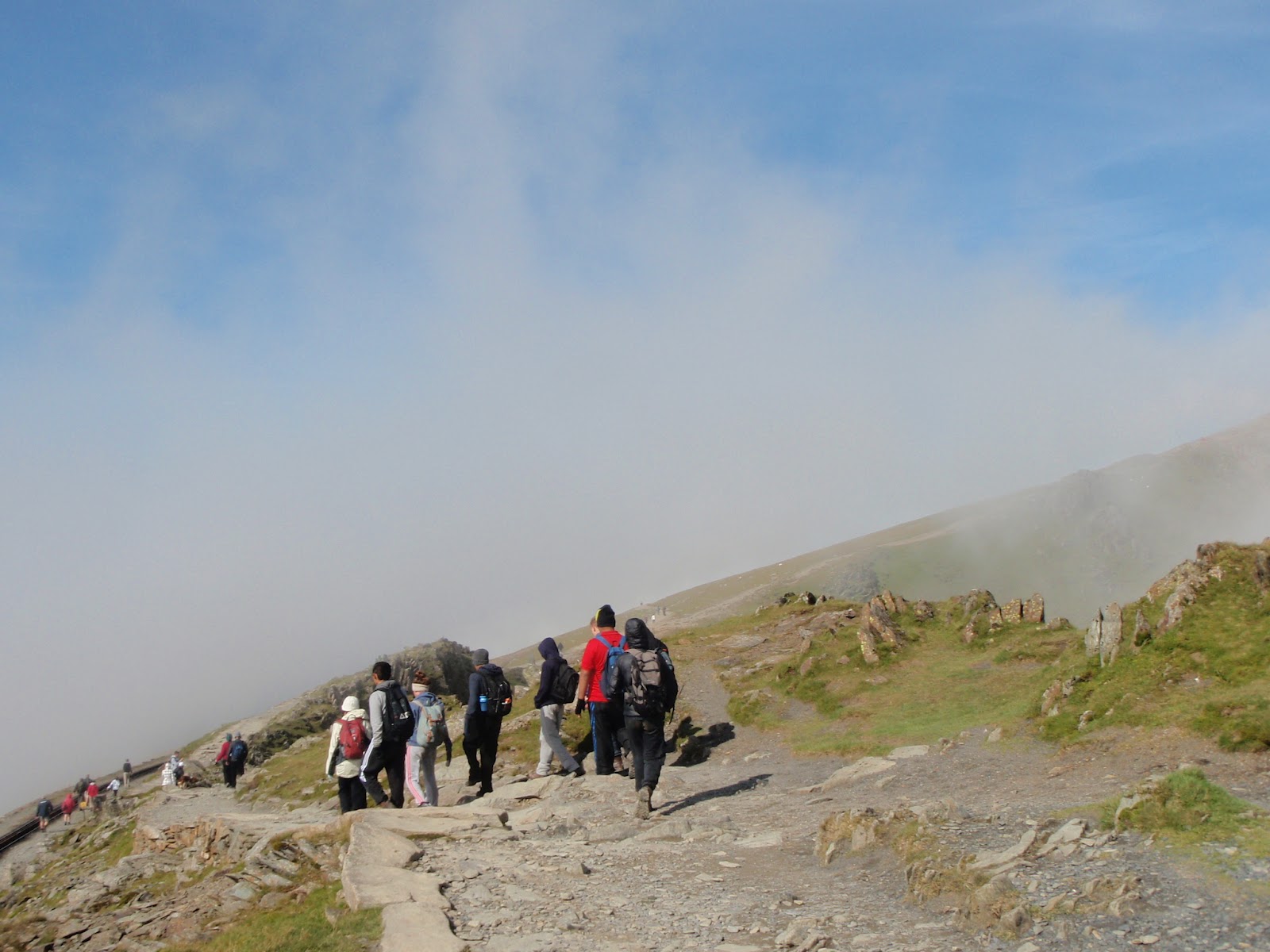
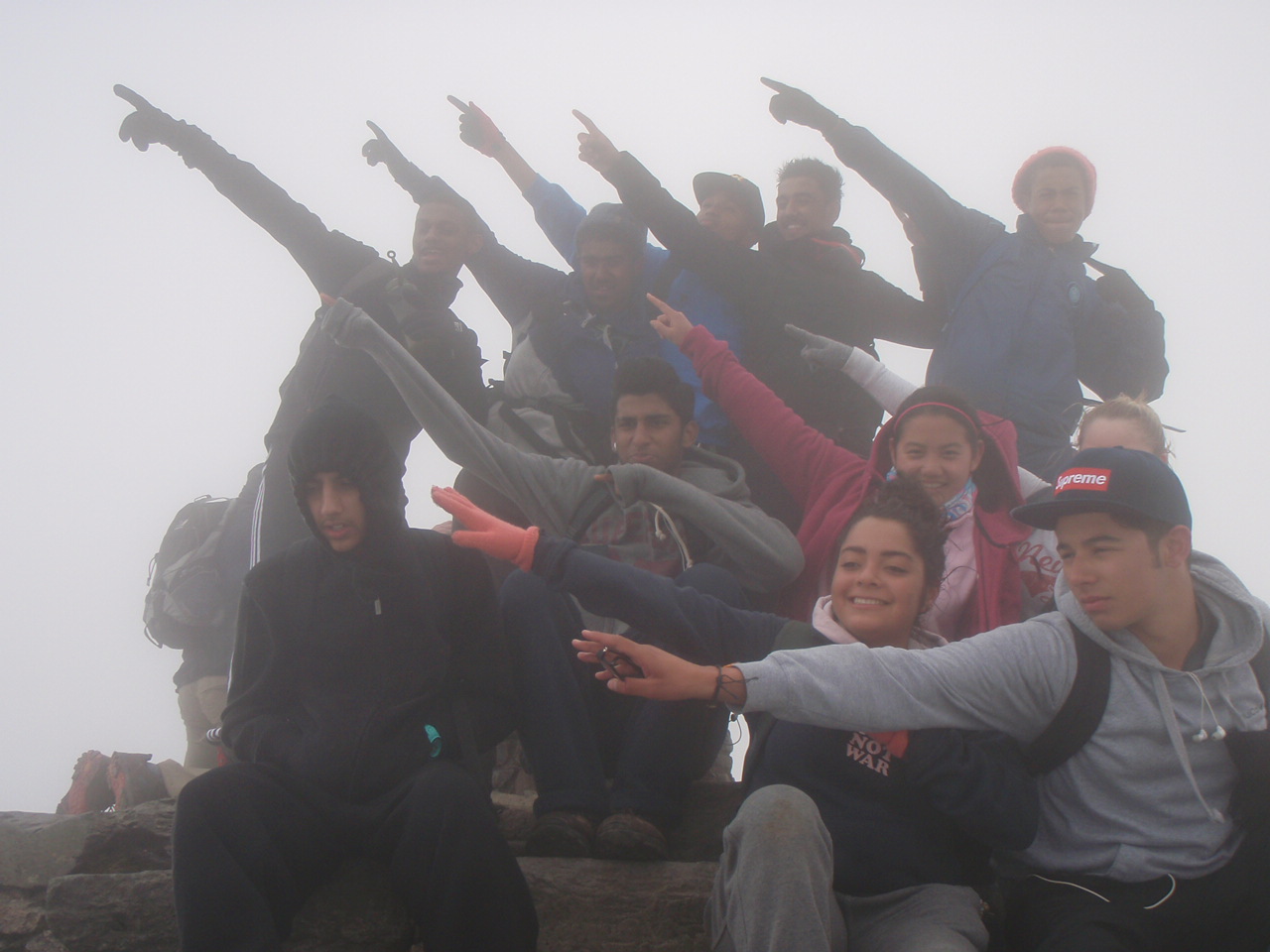
.......and for many, the highlight of the week - a walk to the summit of Snowdon, which at 1085 metres, is the highest peak in Wales and England. Three groups were chosen according to the route - one to climb the Watkin Path, one to branch off to follow the South Ridge and the third starting at Pen-y-pass to follow the Miners' Track, then to the top via the Pyg Track. Although the weather forecast warned of sun as the main hazard, a south-westerly wind brought moist air from Cardigan Bay, so clothing the southerly flanks in thick cloud. Unfortunately, this meant that once at the summit, there was no view. However, the wind direction meant that the descent via the Pyg Track was enlivened by the sight of clouds flowing over the summit and evaporating on the north-eastern side. All managed the ascent and descent successfully and took away memories of their achievement and the mountain itself.


Friday, 5 October 2012
Wednesday 5th September
A beautiful morning and its off to the delights of sunny Llandudno. On the way there is a stop in the small Conwy Valley town of Llanrwst to have a quick look at the £7 million flood defences installed to help protect the town protect itself for when the river bursts its banks like it did in 2004 and 2005.


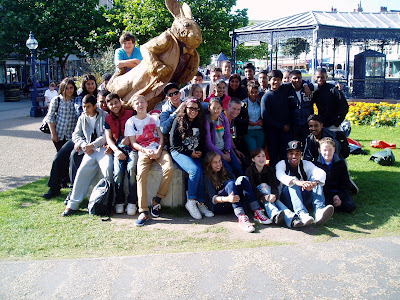
A beautiful morning and its off to the delights of sunny Llandudno. On the way there is a stop in the small Conwy Valley town of Llanrwst to have a quick look at the £7 million flood defences installed to help protect the town protect itself for when the river bursts its banks like it did in 2004 and 2005.
 | ||
 |
 |
| Above map courtesy of http://www.environment-agency.gov.uk/homeandleisure/floods/38435.aspx |
Then it was on to Llandudno, a smart seaside town that has managed to retain its air of gentility despite the changes in holiday habits that has caused decline for so many of the UK's seaside resorts. The development of the town was studies, how it grew up on a sandy tombolo linking the limestone headland of the Great Orme to the mainland. The Mostyn estate still owns the land and strictly enforced covenants ensure that buildings are maintained and the town retains a crisp and cared-for appearance. Today, it is the main shopping centre for the North Wales coast, this being evident by the bustling main thoroughfare of Mostyn Street. Certainly, the sunny almost Mediterranean skies helped present the town in a most favourable light.


Tuesday, 4 September 2012
Fieldwork in Snowdonia
 "How natural is your chosen stretch of river?" - that is the question. So off to Migneint Moor in the Snowdonia National Park to find the answer. The renewal of cattle grids prevented the coach from going any further that Ysbyty Ifan, the highest village on the river, so a system of mini-bus shuttles had to be set up to travel further up the river. Firstly, however, measurements such as width, depth, wetted perimeter and sediment size and roundness were taken.
The village has been prone to flooding. The ancient bridge interrupts the flow of the river and sediment has built-up on the upstream side, restricting the river channel. In the photo (LH) a small wall can be seen protecting the cottages. In the photo above, the coach is standing on top of the flood defence bank built in the early 1990's. Here then, the river has been managed to help reduce the risk of flooding.

 Up onto Migneint Moor, where although there are no settlements, the land is used for rough grazing of sheep. This will have altered the hydrology of the area by removing scrub vegetation and replacing it with peat bogs and rushes. In the past, this area was heavily glaciated, creating a flat bottomed valley which subsequently was filled with sludgy material as the ice melted - solifluction. This resulted in a flat floor to the valley which has encouraged the formation of meanders, a feature more usually found in the lower course of a river.
 Finally on to one of the tributaries of the Conwy, Nant-y-brwyn. A classic V-shaped valley with outcrops of slate. the stream tumbles through a series of pools and riffles. Although the water looks like it is flowing quickly, the friction from the boulders slows it down.
Here the features might be natural but the land itself has been altered heavily by farming. The impermeable rocks and saturated peat result in faster rates of runoff, which in turn lead to flooding further downstream - a problem the town of Llanrwst knows only too well.
Wednesday, 4 July 2012
Field-work in Rochester.

Tuesday 19th June and the day promises to be one of the few in the month to be dry and sunny. Ideal then to spend it studying the central area of Rochester in Kent. The High Street has changed over the years, perhaps reflecting the need to develop a more distinctive character than the "clone town" so often seen these days. Although banks have closed and some of the more unusual shops have disappeared, there is a general smartening in the shops and a wider range including delicatessens and coffee bars and pizza restaurants. the chain store is rare here, maybe because Bluewater is just 15 minutes away via the A2. Few high streets can compete with such a large concentration of national names, so Rochester seems to be reinventing itself as a quirky tourist destination, even if the references to Charles Dickens come thick and fast.
The castle's Norman keep provides an ideal platform from which to assess the site of teh city. Built on the Medway, just a few kilometres from the sea, the spot chosen by the Romans to cross the river is still the site of the modern city. The view from the keep looks out over the double meander that must have been an obstacle to any invader trying to wend their way inland. Look the other way and the M2 and the high speed rail line to the Channel Tunnel can be seen crossing on high bridges to the south.

Sunday, 1 July 2012

Gentrification - An issue worth studying.
Even with the property market in stagnation and homelessness becoming an even greater problem, some areas seem immune. The BBC TV series "The Secret History of Our Streets" has been a fascinating chronicle of how London's residential areas have changed over time. The link below will take you to the BBC article about Portland Road in Notting Hill where the property prices are frightening, as is the social divide!
http://www.bbc.co.uk/news/magazine-18394017
Thursday, 24 May 2012
Holderness Coastal Erosion

A popular case study of the causes and problems of coastal erosion experienced in some parts of the UK. This became national news in 1997 when Sue Earle had to vacate her farm at Great Cowden just to the south of Mappleton and pay £3000 demolition costs. She is suing as she claims the construction of the rock groyne to protect the coastal road passing through Mappleton, starved the beach below her farm of the sediment it needed so accelerating the rate of erosion. This video from the BBC looks at another farm in danger of disappearing, so joining the increasing list of settlements lost to the sea since Roman times.
Subscribe to:
Posts (Atom)